


But before we begin - A quick note:
This issue is brought to you by Pickcraft. Full transparency: Pickcraft is a personal connection, and I’m personally vetting them for New Rules readers. If you’ve ever gotten quoted a six month minimum and a setup fee just to switch fulfillment partners, you know the headache.

Pickcraft does flexible ecommerce fulfillment for CPG, non-alc, mixer, and other brands of all types: clear pricing, no order minimums, and they handle your integration themselves, no technical staff or extra fees required. Built on twenty years in ecommerce and 2.4 million shipments, out of Indiana - smack dab in the middle of the USA (& MY HOME STATE!).
For New Rules readers: six months of the platform fee, waived. Head to pickcraft.co, or reach out directly at hello@pickcraft.co.
NOW, back to wine.
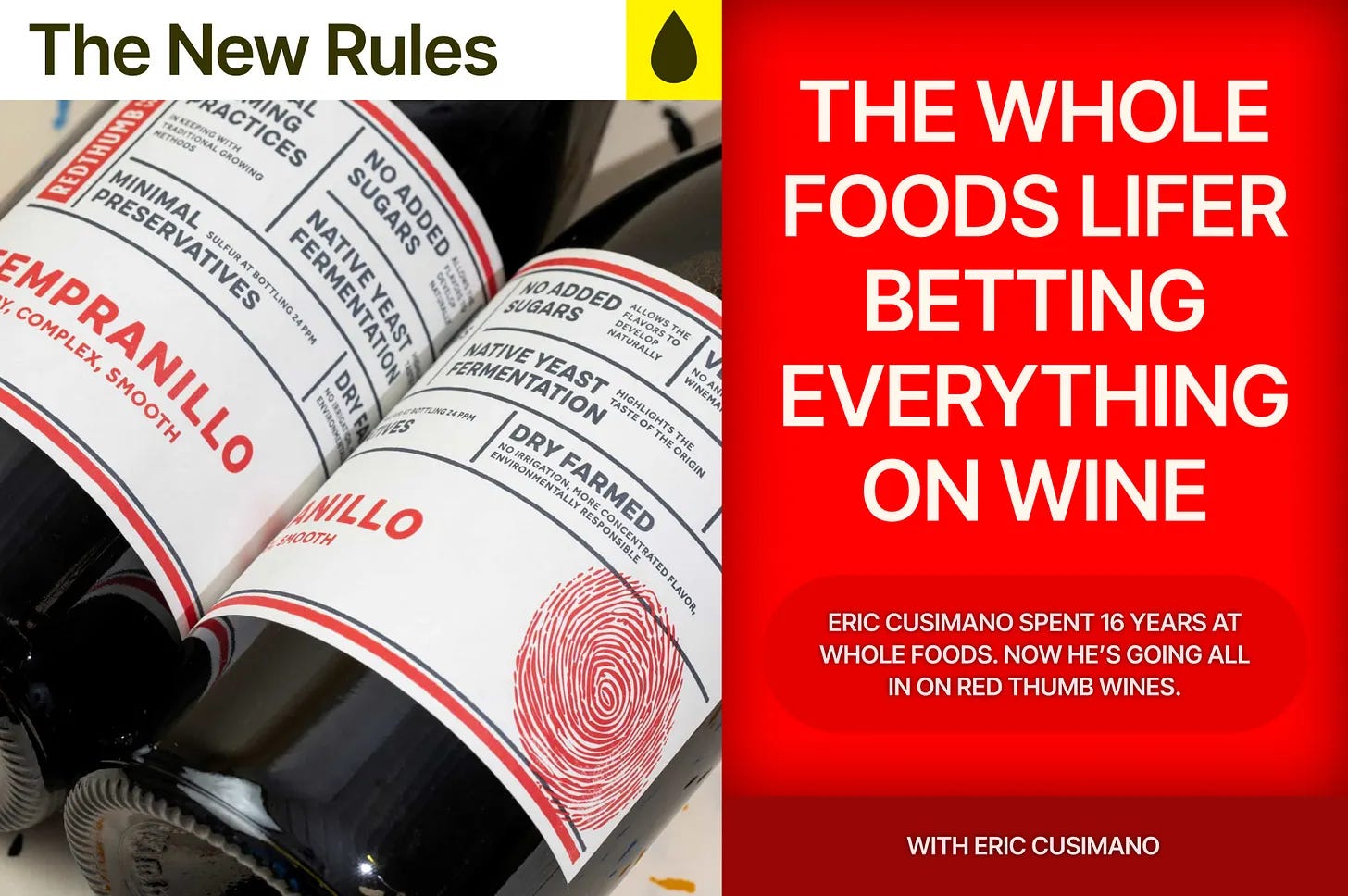
PSA: wine has no legal definition of “natural.” Eric Cusimano (former Whole Foods Lifer) decided to write his own.
Eric spent 16 years at Whole Foods, most recently as director of produce merchandising, before that running the frozen department as the company’s head ice cream buyer. Next week he leaves to become full-time CEO of Red Thumb Natural Wines, a brand he started with two partners almost seven years ago and has been selling in market for four.
The idea came from a natural wine fair called Raw Wine, where an invite to join a friend turned into a business idea. It reminded him of the early days of organic and slow food, before any of it got commercialized - and he wanted in.
Three Guys, one idea, no meaning
Eric’s partners Dave Schavone and Diego Vasquez came with the wine expertise he didn’t have. Dave was the wine buyer for the Beverly Hills Whole Foods and had written a guide to natural wine in LA. Diego ran wine for Wynn properties in Vegas before becoming wine director at Scarpetta in the Cosmopolitan. All three met at Loyola in New Orleans, where Eric was born and raised.
What they found at that first natural wine fair was a category with no actual definition. Nobody could tell Eric what “natural wine” meant, and there still isn’t a legal answer.
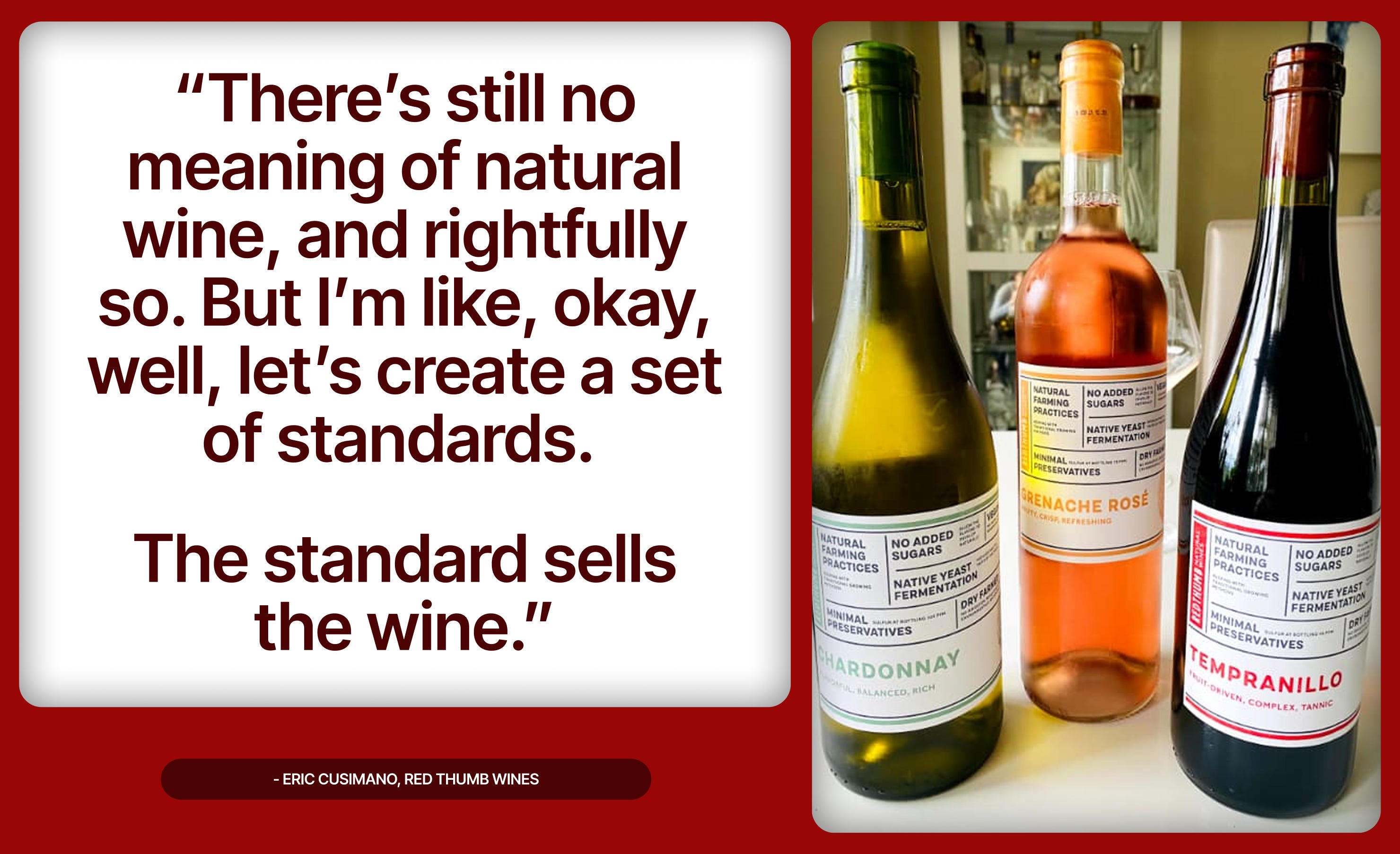
“There’s still no meaning of natural wine, and rightfully so. But I’m like, okay, well, let’s create a set of standards. The standard sells the wine.”
So that’s what they did. Red Thumb wines list native fermentation, no added sugar, and the exact sulfite count in parts per million, front and center on the label. Ingredients and nutritionals are on the back. Everything is estate grown and vintage dated. It’s the kind of disclosure most wine brands avoid, because most wine brands would rather you not ask.
And in terms of brand development, the price point came first. Eric ran the math and knew the wine had to land around $20 or under to scale the way they wanted it to. From there, a lucky connection (a friend’s father, recently retired as president of a wine co-op in Languedoc) got them access to growers and winemakers across the south of France and into Spain. Diego tasted hundreds of wines to land on the three they sell today: a Tempranillo, a Chardonnay, a Grenache Rose and a Monastrell added last year.
The part most founders skip
Most brand conversations stay in highlight reel mode. I appreciated Eric’s candor on our call because it hasn’t just been a series of ups.
They launched Red Thumb into 2020, right as COVID hit. Investors who’d committed pulled out, reasonably, and the brand went quiet for years while Whole Foods and every other retailer focused purely on keeping shelves stocked, not testing new brands. By the time buyers were ready to look at something new again, the wine industry was sitting on almost double its usual inventory, and nobody wanted more of anything. Then came the tariffs.
“I’m very bullish on wine in 2027 and forward. I think it’s at the bottom right now.”
Eric was just as direct about where the business actually stands. Red Thumb will do around $500,000 in revenue this year, on a little over $1 million raised across seven years, most of it already spent getting this far.
Hot take on investment in bev right now:
He’s not planning to draw a real salary once he goes full time, at least not at first. And he isn’t precious about who’s good at what: “As a whole, the wine industry has been less business-forward and more dogmatic than I anticipated” he said, including himself and his partners in that. Marketing is the gap he’s most aware of. “None of us are marketing minds. We very much know that we need the help. We’re not doing a great job at that right now, to be completely honest.”
That kind of candor is rare to get on the record. Most founders default to “all good here” the moment a microphone’s on. I really appreciated that about this conversation.
No celebs, please.
Red Thumb has had chances to bring on a celebrity backer in exchange for a chunk of the company. They passed every time. Eric wants the wine, and the actual winemakers behind it, to be the story, not a famous face attached to it.
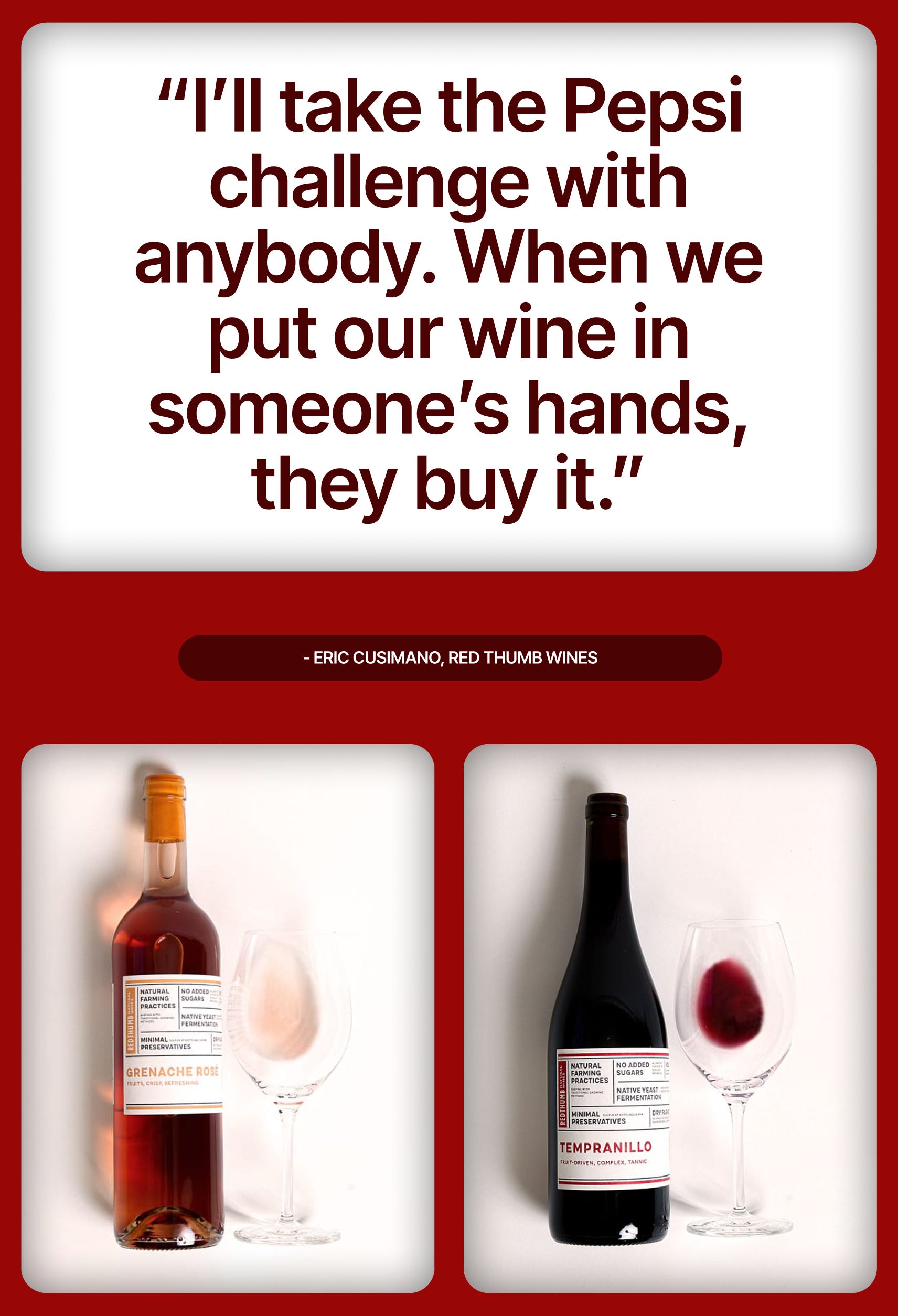
On the sales floor, that philosophy holds up against something more basic: putting the bottle in someone’s hand. Education matters, but Eric has seen what actually converts.
“I’ll take the Pepsi challenge with anybody. When we put our wine in someone’s hands, they buy it.”
He also thinks the industry is aiming at the wrong drinker. Most legacy wine marketing still leans on rolling hills and spa treatments built for an older, wealthier customer whose spending power is shrinking. Meanwhile the customer Red Thumb is actually built for (25 to 39, mostly but not only women, natural and organic food shoppers) isn’t being spoken to by anyone.
THE NEW RULE: transparency isn’t a label claim, it’s a practice. The brands worth trusting are the ones that will tell you what’s on the sulfite count and also tell you when the last four years have been genuinely hard.
The New Rules is a labor of love by nihilo.agency
Need design support for your brand? Reach out! hi@nihilo.agency
And support our work by:
Subscribing
Sharing
Inviting us to speak at your conference or event on branding/bev/alc/fun
Cheers.