


Every category has an origin story, and this one keeps repeating itself.
Someone who loves cocktails, but isn’t a bartender, tries to host a party. It goes badly, not because they’re bad hosts, but because making a proper drink for a room full of people is genuinely hard, and most of us were never taught how.
I heard one version of that story from Michael Handman at Deko Cocktails. I heard a different version from Cy Cain at Straightaway. Two brands, same root complaint: cocktail culture has never made this easy on the people who actually want to participate in it.
I’ve also been thinking about two brands we’ve already featured in this category: Hoste, the ultra-premium bottled cocktail brand turning bar-quality drinks into a gifting product, and Wild Mannered soju. Between the four, you can see a whole category figuring out what it actually is.
NIQ puts the ready-to-drink and ready-to-serve market at $13.9 billion, about 12.5 percent of total beverage alcohol dollar sales. Circana says the category has more than tripled since 2018
Why now
Both founders trace the real inflection point to the same thing: the pandemic (it all starts there doesn’t it?)
Straightaway actually predates it. Cy Cain and his co-founder started bootlegging cocktails for friends and family fourteen years ago, batching drinks in their own kitchens and driving bottles to people’s houses for the holidays. They ramped up R&D significantly in 2013, and Cain left his job in 2017 to launch the company legally in 2018. At launch, Cain says they were one of maybe 30 distilleries nationally built around this idea. There are roughly 2,500 brands in the space now.
“This category clearly fits a need for consumers. You just put a match to it with the pandemic.” Cy Cain, Straightaway
Deko Cocktails founder Ushi Shafran had a similar wake-up call, minus the decade of bootlegging. He hired a bartender to batch cocktails for a party at his house. It was a hit that night. Two days later, the drinks had separated and looked, in Handman’s words, “really gross and ugly.”
Shafran went looking for a bottled alternative and couldn’t find one that met his bar, so he and a co-founder, neither with any beverage alcohol experience, found a small incubator distillery on the North Fork of Long Island and made about 150 test cases to gauge interest with friends and family. That was 2021, when the premium end of this category was basically On The Rocks and a handful of regional players like Straightaway.
It took about a year of momentum before Shafran decided to go all in, recruiting Handman, a fine wine and luxury spirits veteran, to rebuild the brand from the ground up. Neither founder set out to build an RTS brand. They set out to solve their own hosting problem, and only later realized thousands of other people had the same one.
What it says about how we’re drinking now
This isn’t really about convenience for its own sake. It’s about who gets to participate in cocktail culture, and on what terms.
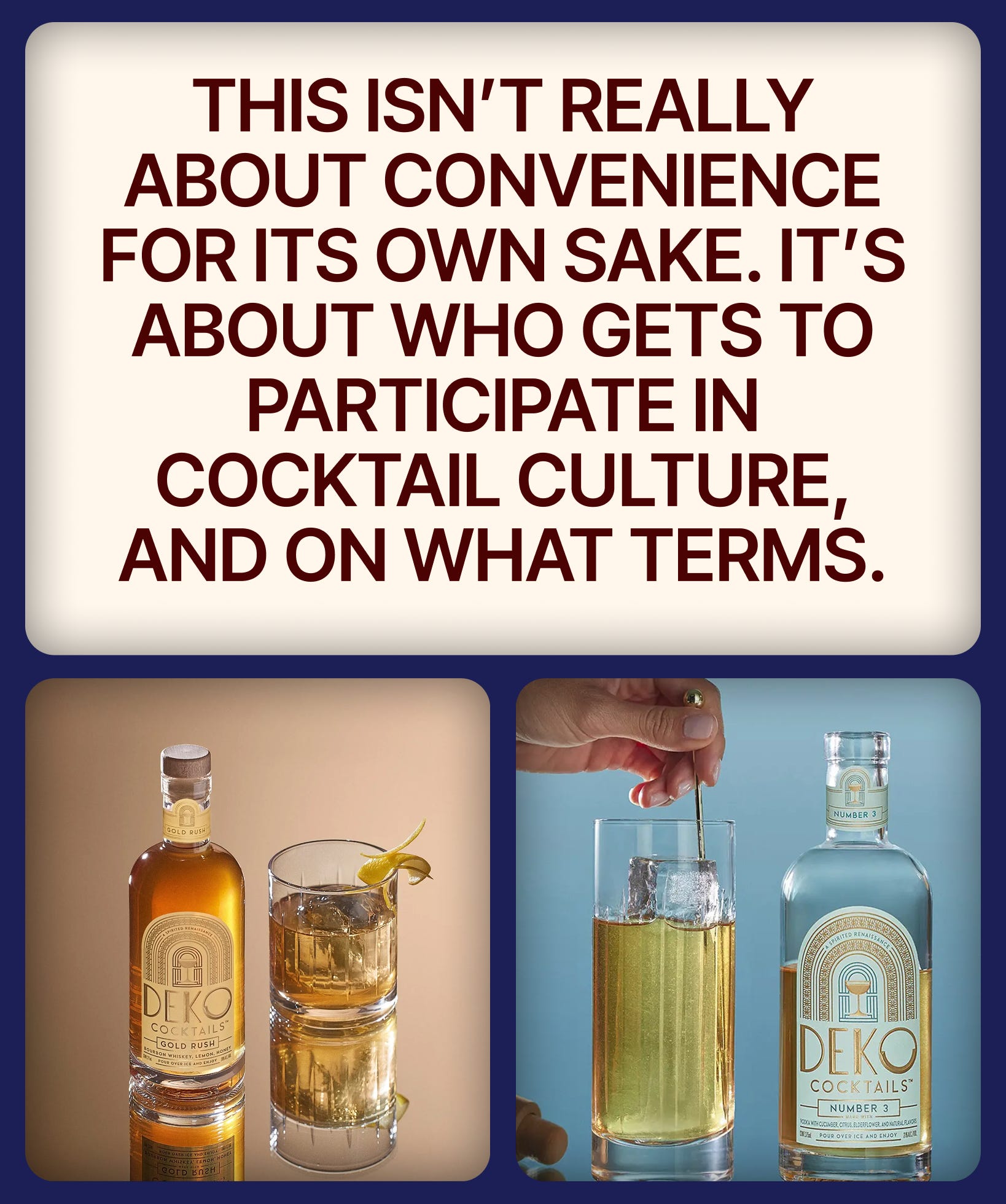
Handman ran the math on a homemade Negroni for me: a bottle of gin, a bottle of Campari, a bottle of vermouth, close to $150 in ingredients for a drink a lot of people won’t even like. A bottle of Deko Cocktails gets you four cocktails from $20.75/bttl.
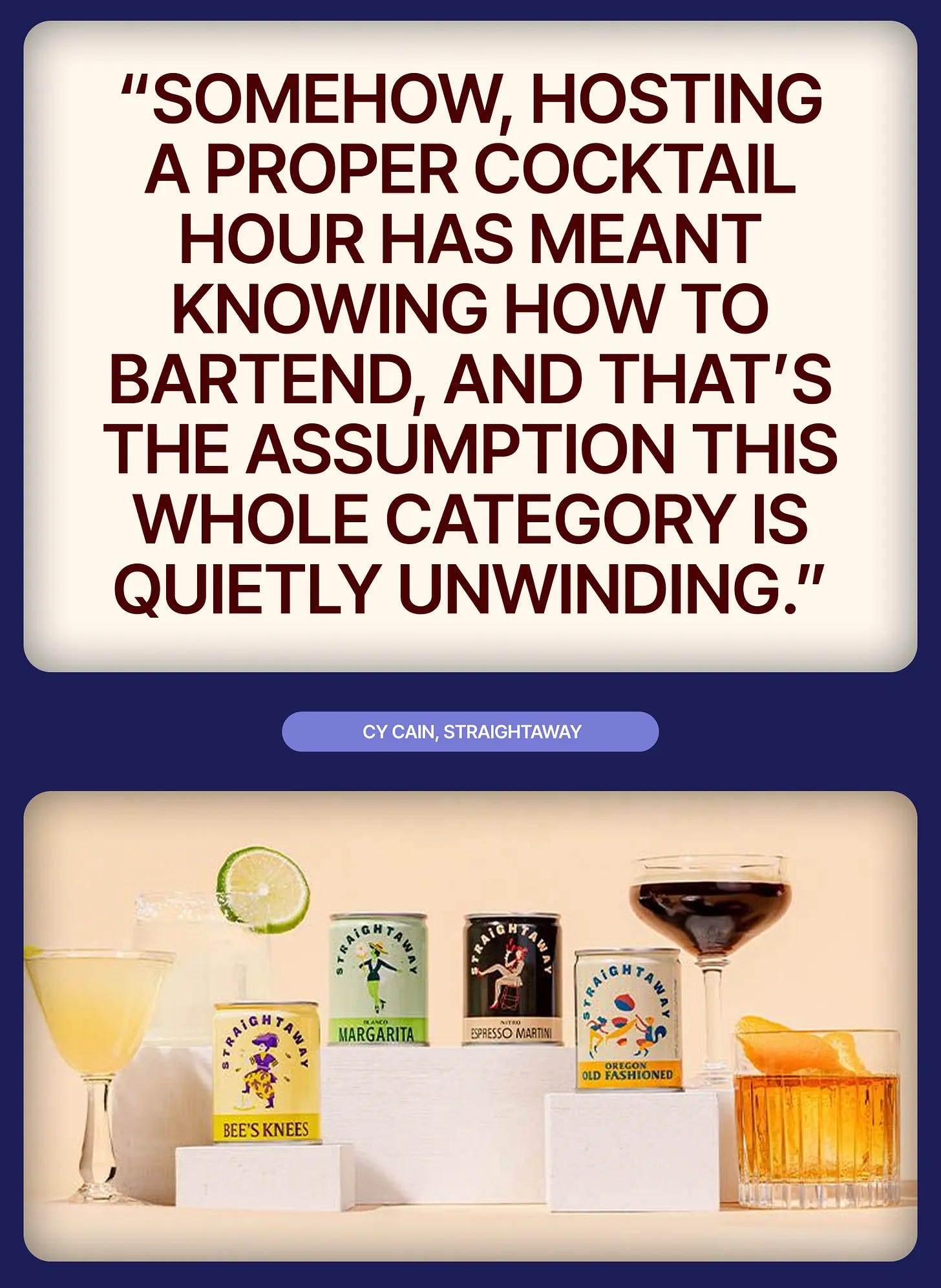
Cain makes a related point from the professional side. Nobody expects themselves to make a cabernet or mill hops for a pilsner before serving wine or beer to guests. We just pour it and move on. Somehow, hosting a proper cocktail hour has meant knowing how to bartend, and that’s the assumption this whole category is quietly unwinding.
Deko Cocktails expected a younger, urban, female-skewed customer. Their actual buyer skews older than fifty and lives outside major cities, which Handman only learned once DTC data gave him a real read on who was buying. People aren’t drinking less because they’re drinking differently. They want the ritual and the result without the apprenticeship, and they’re willing to pay a real price for both. And listening to the customer is key.
Four different bets on the same category
Deko Cocktails, Straightaway, Hoste, and Wild Mannered aren’t making the same bet, even though a retail buyer would file all four under one category tag.
Deko Cocktails is playing the platform game. Handman rebuilt the brand with new packaging and creative through branding agency Stranger & Stranger, and a pricing strategy anchored to what a bar would charge for the same ingredients, not to shelf comparisons.
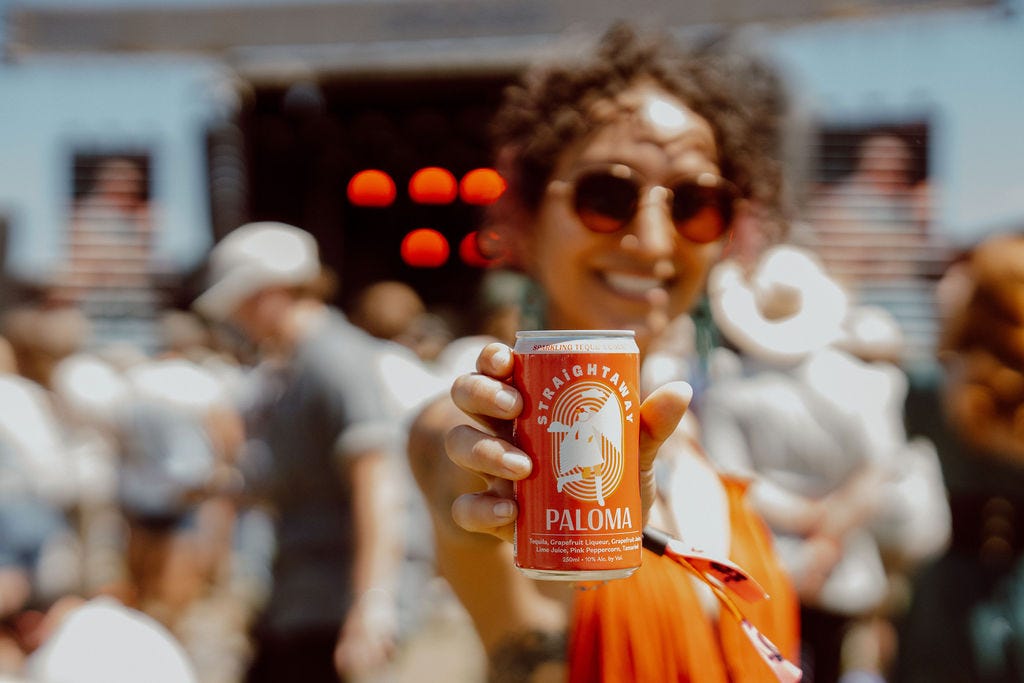
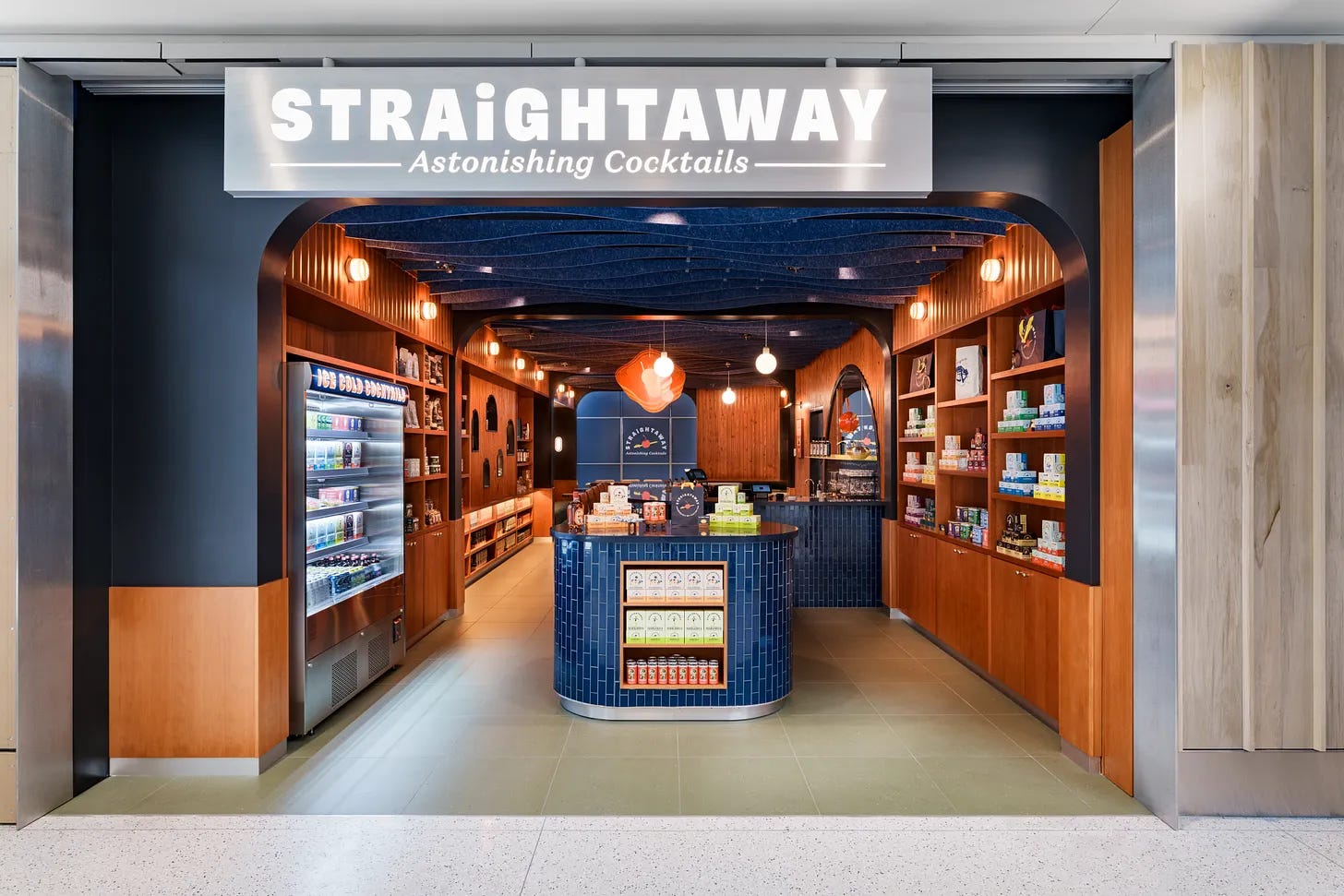
Straightaway is playing the credibility game. They’re a dual-licensed distillery and winery that makes its own bitters, shrubs, and modifiers, originally just to build their own cocktails. In 2022, they branded that back bar as Accompani and started supplying the same house-made spirits to top bar programs, including Violet Hour and Whistler Bar in Chicago and Borgo and Le Crocodile in New York. Their new cocktail bar inside the Portland airport, one of twenty brands to win the port’s RFP, makes that case physically: come watch us make it, the way you’d tour a winery.
“We’re a cocktail company. We’re not a widget on a shelf kind of brand.” Cy Cain, Straightaway
That credibility bet is paying off in the data. Straightaway has led the category in weekly dollar velocity on Circana for more than 20 months straight, eclipsing incumbents like Cutwater and On The Rocks by a wide margin, on a sales team of two and a half people. On NIQ's ready-to-serve rankings, they're one of the fastest-growing brands in the category: fourth over the past 52 weeks, trending into second over the past four.
One buyer put a number on what that means at the register. The head buyer at a notable natural retail chain told Straightaway they represent one in every three dollars sold across that store’s entire RTD set.
Hoste is playing the occasion game, betting nobody searches for “best RTS cocktail” but everyone shops for gifts and better hosting, pricing accordingly at $80 to $150 a bottle. Wild Mannered is playing the cultural-arbitrage game, riding soju’s rising U.S. visibility and translating an unfamiliar spirit into something approachable, with a real ingredient story attached. Four different theories of what people are actually buying: platform trust, professional credibility, occasion, or a spirit’s cultural moment.
The real challenges
Two problems come up in almost every conversation I have in this category.
The first is education. Straightaway spent years building the brand while also teaching consumers that a canned cocktail could be as good as one built to order, even though most of the world’s best bars already batch 60 to 70 percent of what they serve.
The second is price perception, and it’s coming from the wrong side of the counter.
“The only folks that are price sensitive to it are the wholesalers and the retailers.” Michael Handman, Deko Cocktails
Handman's point: consumers aren't the ones flinching at Deko Cocktails price. Wholesalers and retailers are, because they assume the shopper will balk before the shopper gets the chance to. Both founders are also watching the category get crowded fast, with newer entrants prioritizing pack format over the actual liquid, and both are betting quality is what separates the brands that last from the ones that were simply first to a shelf.
What they’re actually trying to build
Neither founder is chasing a quick flip. Handman wants Deko Cocktails to become a lasting platform for cocktail innovation across spirit categories, alcoholic and eventually non-alcoholic, rather than a single product line. He’d take a knock on the door from Beam or Bacardi someday, but that’s not the plan he’s building toward day to day.
Cain is even more direct about resisting an exit mindset.
“Any brand worth its salt is a ten-year overnight story.” Cy Cain, Straightaway
Straightaway has put its capital into production capacity, tasting rooms, and now an airport bar, rather than into sales headcount or marketing spend. They're finally, by their own account, close to profitable, on their own timeline.
The New Rule
This category isn't really selling convenience. It's unbundling the skill of bartending from the desire to drink well, and the brands doing it right have a specific, defensible answer for which part of that experience they're actually selling.
The New Rules is a labor of love by nihilo.agency
Support us by:
- Subscribing
- Sharing
- Hiring us
- Inviting us to speak at your conference or event on branding/bev/alc/fun
This was one of my favorite pieces since I subscribed to this newsletter, which I also LOVE!