


“It is forbidden. No new rules.” ~ Tad Dorda, founder, Chopin Vodka
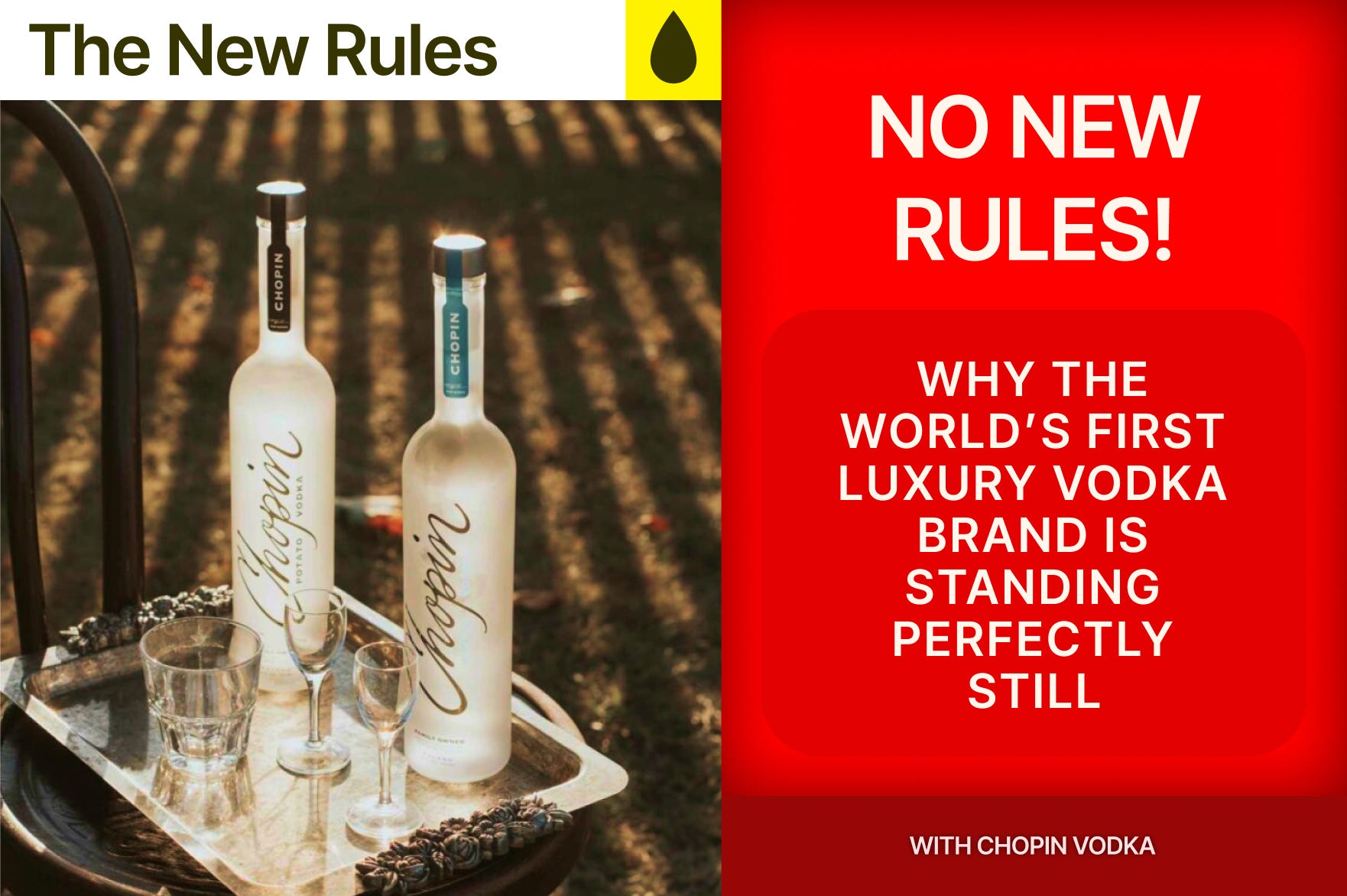
At The New Rules, we obviously are into the new rules. Tell us what you’re doing that’s different. Show us how you did what no one said you could do. We’re always looking for the ways the industry is evolving, and the people and brands that are moving it forward.
But when I sat down with Tad Dorda and his daughter Alexandra Dorda-Marcu – the founding family behind Chopin Vodka – I was aptly challenged in my approach. This industry (myself included) is obsessed with the “pivot,” the “secret sauce,” and Chopin’s strategy is the opposite of that: a radical commitment to the permanent.
For thirty years, the Dordas have played by a singular, ancient rule: make vodka the “good way, the original way.” They are not planning to change that.

The strategy: the war on neutrality
Chopin’s central mission has been a decades-long war against the very word “neutral.” Legally and culturally, vodka has been defined as a spirit without distinct character, the spirit you can mix with anything and not taste.
Tad Dorda views this as the industry’s greatest misrepresentation.
“If it’s a neutral spirit, there’s nothing to talk about,” he explains. “But vodka is not a chemical product. It has terroir. It has a place where it grew, people who planted it, and who distilled it.”
By producing single-ingredient vodkas (potato, rye, and wheat) side-by-side, Chopin forces a conversation that most of their competitors would rather avoid. They are betting on the liquid’s character in a category that has spent a century trying to erase it.
The radical simplification: scaling the “slow way”
Perhaps the most contrarian move in Chopin’s 130-year history (that’s how old their distillery is!): is their refusal to scale at the expense of season. While most brands chase growth by ensuring 365-day production cycles, Chopin is beholden to the harvest.
Their signature potato vodka is distilled only when the ingredients are fresh during a tight three-month window from September to November. While they could store potatoes in refrigerated warehouses to produce year-round and juice their margins, they flatly refuse.
“Don’t rush it,” Tad warns. “Don’t try to make much more of it very fast because you will have to sacrifice quality. If we change something, we’ll only mess it up.”
Intuitive identity: from Podlaskie to Vera Wang
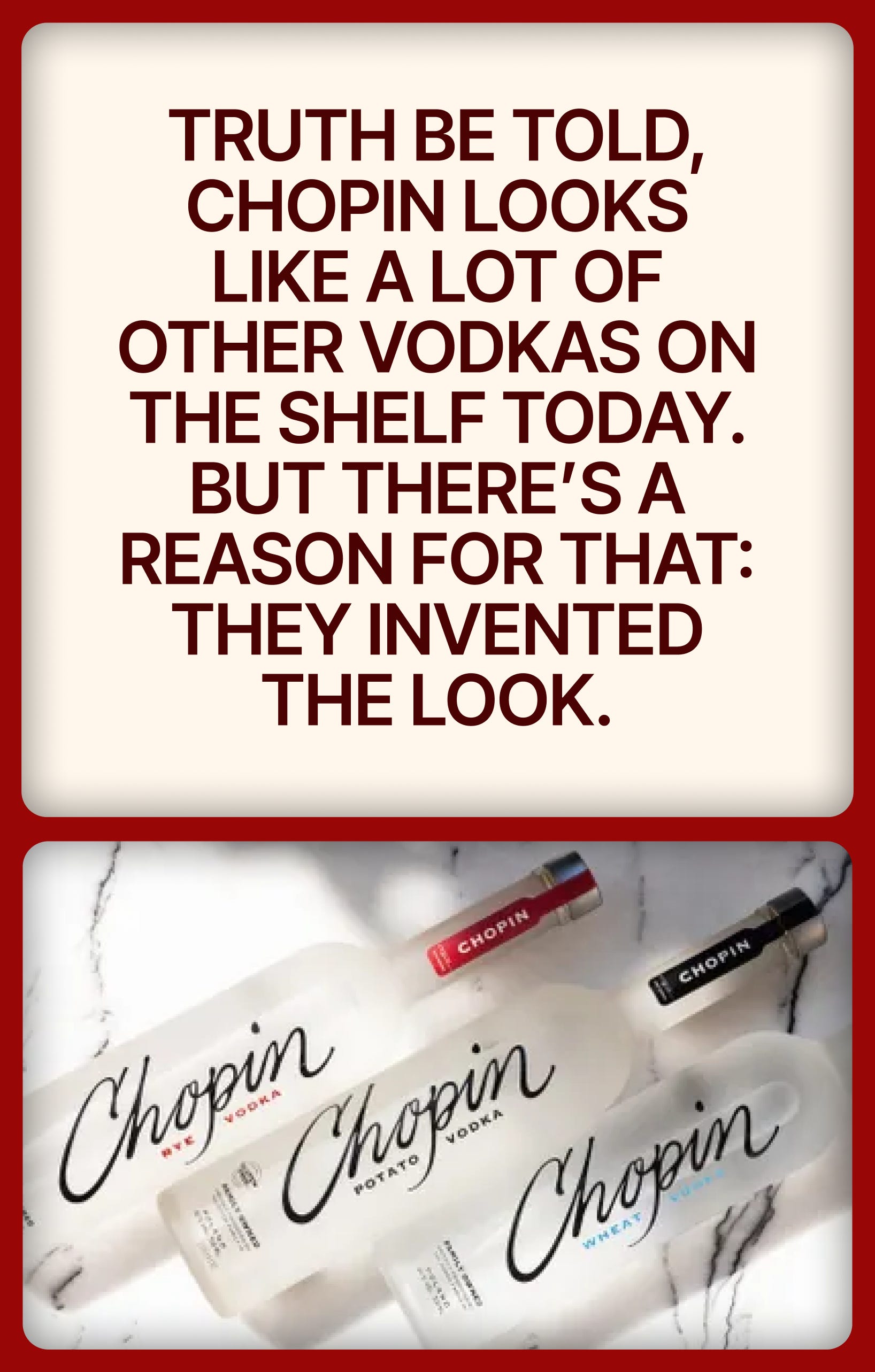
Truth be told, Chopin looks like a lot of other vodkas on the shelf today. But there’s a reason for that: they invented the look.
Alexandra explains that the frosted wine bottle with the clear window, now a category standard, is a design originally patented by Chopin and created by the factory workers at their distillery in Podlaskie, Poland, in the early 90s.
Instead of hiring a high-priced London or NYC branding agency to define their “vibe,” the Dordas rely on intuition.
This authenticity is what led to their recent collaboration with Vera Wang. It wasn’t a “normal corporate arrangement” engineered by agents; it was a lunch between two people who shared a passion for craftsmanship. Vera designed a bottle – and personally selected the liquid inside – for a brand she had already been drinking for twenty years.
Simplicity as the final achievement
“Most consumers drink a brand or a price point, not a liquid. We want to have an intelligent conversation about what is actually in the bottle.” ~ Alexandra Dorda-Marcu
As we wrapped up, Tad returned to a sentiment often attributed to Frédéric Chopin himself: “Simplicity is the final achievement.”
In a sea of 4,000 SKUs and endless gimmicks, Chopin is happy to remain “small and tiny” (I asked them to define “tiny” but did not receive a conclusive answer). They aren’t chasing the next generation of drinkers with a rebrand; they are waiting for that generation to realize that the cleanest, most honest distillation in the world doesn’t need to change to stay relevant.
Kaboom.
The (NOT) New Rules:
1. Standing still can be a disruption. In an industry obsessed with the “new,” a radical commitment to the original process creates a distinct brand whitespace. If everyone is pivoting, staying exactly where you are makes you the landmark.
2. The liquid must tell the story. “If it only sells when you’re demoing it and telling the story, you’ve failed,” is a common industry mantra. Chopin takes this further: the liquid should be so distinctive (like their creamy potato profile) that once a consumer tastes it, they can never go back to “neutral.”
3. Simplicity is a virtue, not a lack of effort. Refusing to add SKUs or rebranding etc. isn’t about doing less; it’s about protecting the “final achievement” of a perfect product.