


Last week The New Rules invaded Brooklyn for BCB!
If you caught up with us at Industry City or swapped notes with the team, thank you for making it an incredible week. If you are still nursing the general industry fatigue that comes with navigating today’s volatile landscape, read on because we have some notes for you.
For the first half of the year, the beverage industry has been speed-skating through what feels like a massive, unpredictable curve.
We are navigating a multi-layered reality characterized by distributor inventory corrections, a historic wave of strategic M&A (Molson Coors buying Atomic Brands, Gallo snapping up Four Roses, the list goes on), and a fundamental evolution in how people actually consume liquid.
To get a real, unfiltered pulse check on how independent brands are handling this mid-year shift, I caught up with three distinct The New Rules alums during BCB week to talk about market velocity, Gen Z realities, and where the momentum is shifting for the second half of 2026.
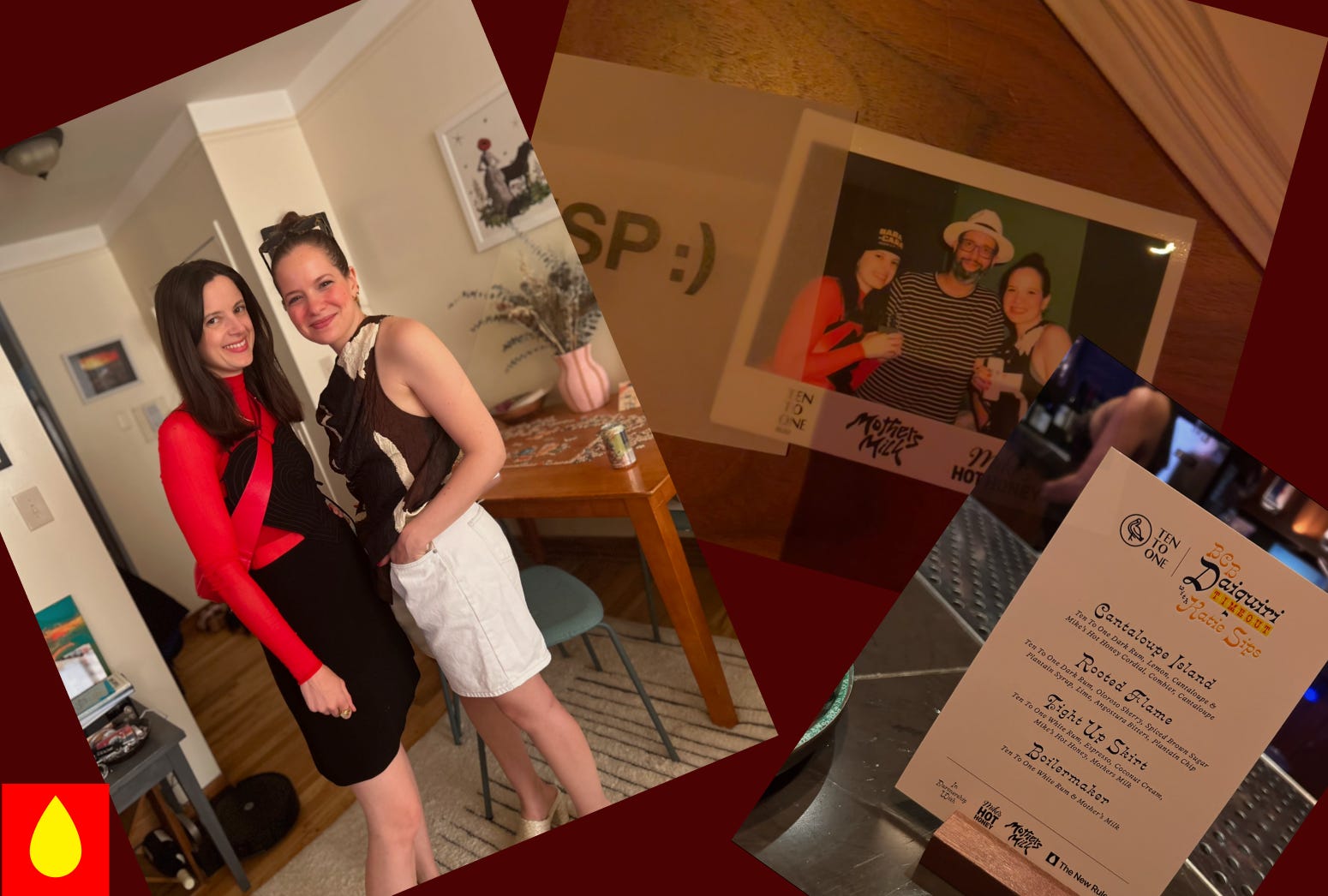
1. Mother’s Milk: The Convergence of “Turning Up” and Functional Wellness
When we last checked in with Jen Roman-Matito and Kristie Kish for our “Newbies” series, they were building out their vision for a coconut-water-forward, anti-hangover canned cocktail. Halfway through 2026, they find themselves sitting exactly at the intersection of the two most explosive trends in modern beverage.
Jen: “Two things that I’ve seen that are really positive for the business is: one, canned cocktails are the fastest-growing category in alcohol - period. Secondary, in the non-alc space, functional beverages are through the roof in every way, shape, or form.”
For Mother’s Milk, navigating this landscape means scaling up with aggressive, deliberate liquid choices. They are bringing two new spirits to market via a tequila and a rum SKU. Currently anchoring the Northeast territory, the brand is mapping its next big move southward, targeting Florida as its next anchor state for late 2026.
2. Wild Mannered: Shifting Toward Sessionability and RTS Economy
For Michael and Perry, the childhood best friends behind the premium soju brand Wild Mannered, the first half of 2026 has been a period of macro-stabilization. Emerging from what they call the “COVID hangover period,” they are watching consumer trends solidify around lower ABV, clean ingredients, and sessionability.
Michael: “We’re all shifting a little bit more towards lower ABV, sessionable, high-quality ingredients—things that are easier to drink, but also a little bit of a different riff on traditional spirits.”
While industry analysts obsess over whether Gen Z is drinking like previous generations, Wild Mannered has found their core traction by positioning their 13% ABV liquid against traditional, heavy RTD incumbents. Looking toward the remainder of the year, Michael points out that the real category breakout to watch isn’t another single-serve can, but the evolution of Ready-to-Serve (RTS) multi-serve glass formats, driven by macro giants entering the fray and a consumer desire for shared, economical social experiences.
3. Little Saints: The Death of “All-or-Nothing” Sobriety
We included Little Saints in our first-annual New Rules of Brand Building in Bev/Alc report, tracking their rapid growth. After a Shark Tank appearance that generated $2 million in a single month on her website, founder Megan Klein has watched the brand settle into steady retail momentum across Sprouts and Whole Foods. Her internal consumer data reveals a massive behavioral shift in how people view the non-alc category in 2026.
Megan: “In 2025, non-alc still felt pretty new to most people, and people were thinking about non-alc like very ‘all or nothing.’ They were either going out drinking or they were like not drinking. The 2026 survey was totally different. People are not counting the days they don’t drink anymore.”
Instead of rigid sobriety rules, consumers are fluidly blending categories within the exact same night out, swapping between standard pours and premium non-alc cocktails. This data aligns with Megan’s production strategy. While their premium bottled non-alcoholic spirits carry a strong dollar value, volume velocity is overwhelmingly driven by packaging format, with 90% of their unit volume moving through cans.
The Takeaway: Stop Looking at the Hinges
As the industry navigates the final stretches of this mid-year shift, it is incredibly easy to get bogged down in the hyper-calculated metrics of distributor contraction or macro consolidation.
But as these three brands show, market validation does not come from waiting for 100% certainty or begging a legacy system for permission. Velocity belongs to the founders who look past the noise of the test, focus entirely on the raw truth of consumer connection, and simply burn the boats to move forward.
Let’s go 🔥🔥🔥🔥🔥🔥🔥🔥🔥🔥🔥🔥.
The New Rules is a labor of love by nihilo.agency
Need support for your brand? We do:
- Design
- Content creation
- Interviews
- Advisory
Reach out! hi@nihilo.agency
And support our work by:
- Subscribing
- Sharing
- Inviting us to speak at your conference or event on branding/bev/alc.
Cheers.