


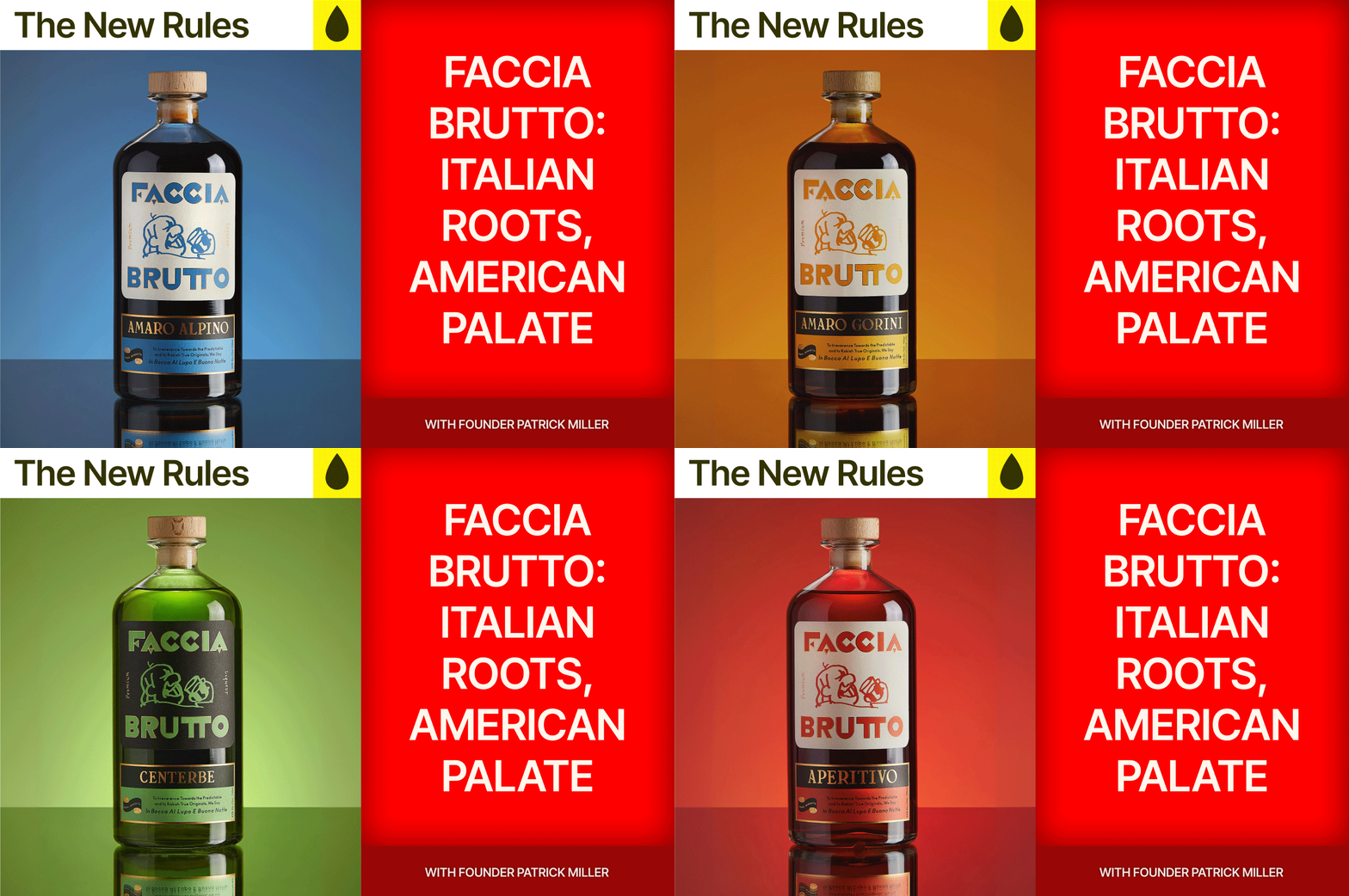
Faccia Brutto makes bitter liqueurs that honour their Italian roots while keeping the modern American palate in mind. It’s a brand that’s grown slowly, honestly and with a lot of discipline – thanks to founder Patrick Miller’s background as a chef.
And it’s not just the exceptional taste; Patrick has created one of those brands where the story, the liquid and the visual world feel truly inseparable.
Here’s how:
A chef’s approach to flavor and structure
Patrick Miller came to spirits through kitchens, and that background shapes how he thinks about amaro. “I think about balance,” he says. “If there’s too much fat or acid or salt in a dish, people know instantly.” When he looked at what existed in the domestic category, things felt off-kilter, either too sweet or too bitter.
His intention from day one was to make products that are supremely well balanced. He respects Italian tradition but doesn’t treat it as a fixed formula — for example, legacy Italian brands use a lot of sugar, but Patrick says he’s made a conscious decision to use a more “appropriate” amount. He also adds salt because it brings flavors out.
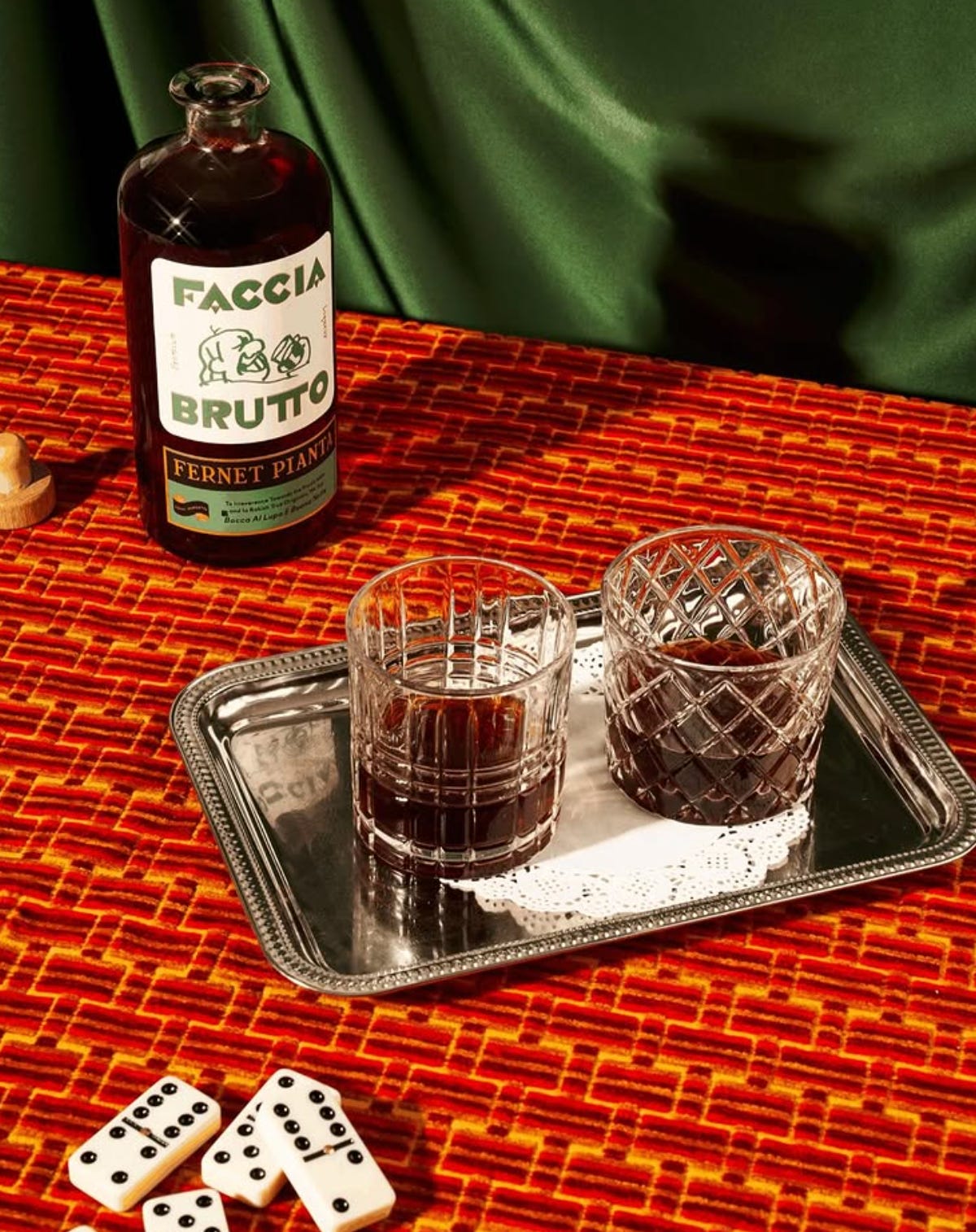
These adjustments give Faccia Brutto a flavor profile that feels both rooted and modern. It respects where amaro comes from while creating something more aligned with how Americans actually drink.
A brand world built on imperfection
Faccia Brutto’s visual identity carries the same energy as the liquid. It’s confident without being polished, humorous without being silly, and intentionally imperfect. The name itself came to Patrick suddenly. Faccia Brutta means ugly face, which he loved, but he went further. He intentionally mismatched the grammar.
He laughed when he told us: “I’ve received a lot of emails and phone calls asking why the name is incorrect, but it felt right.” That slight tension is the brand. It’s meant to feel human and slightly off in a way that draws you in.
The design came from Garrett Elizabeth Office, a small husband and wife studio that Patrick worked with when they first broke out on their own. He wanted the typography to feel throwback without being nostalgic, and the designers built a system that feels old-world but filtered through a very American voice.
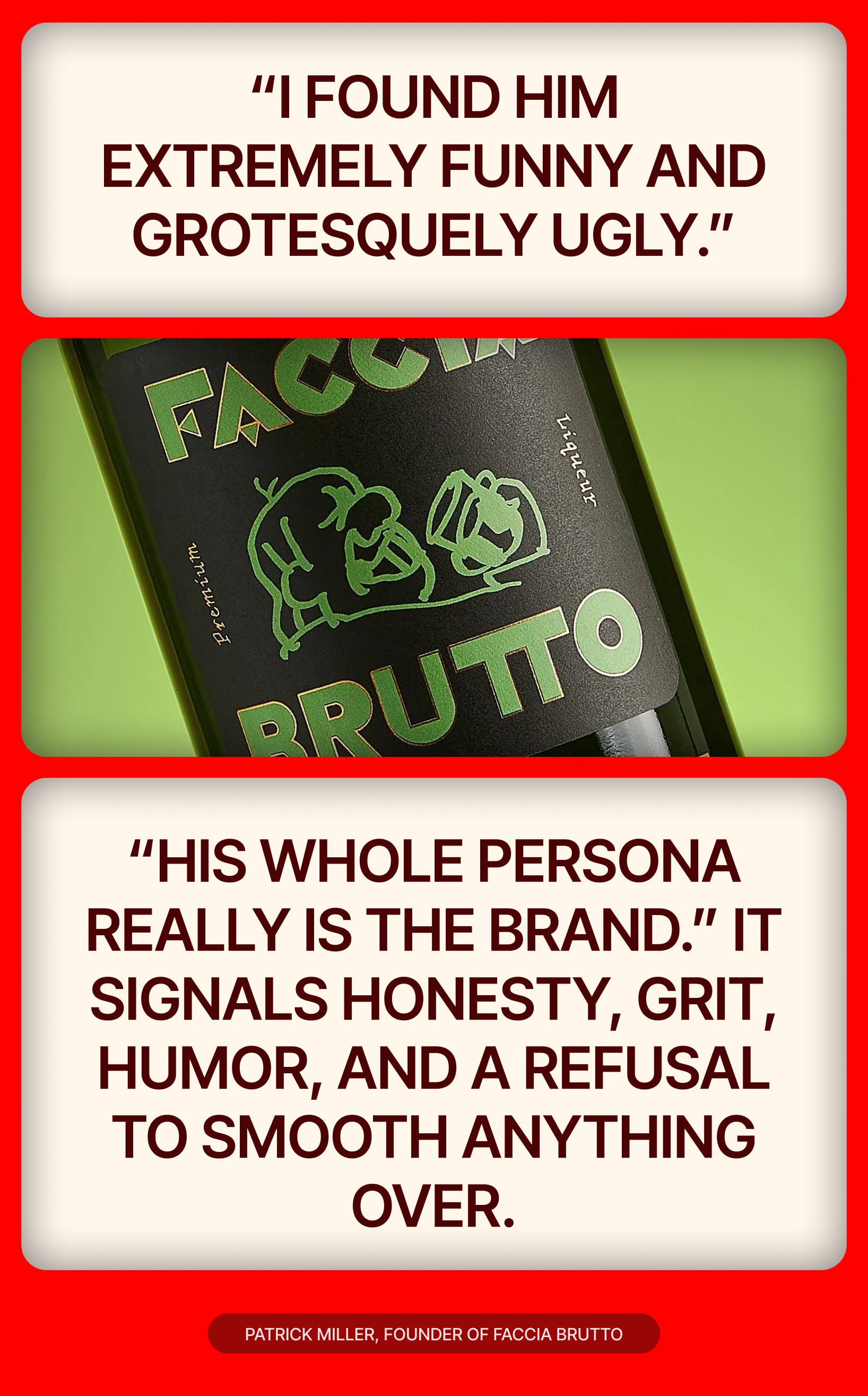
And then there’s the drinking man. Patrick asked the designers to “put Charles Bukowski on the label in some fashion,” which is how the illustration landed on that beautifully imperfect figure. “I found him extremely funny and grotesquely ugly,” Patrick says. “His whole persona really is the brand.” It is not a reference for reference’s sake. It signals honesty, grit, humor, and a refusal to smooth anything over.
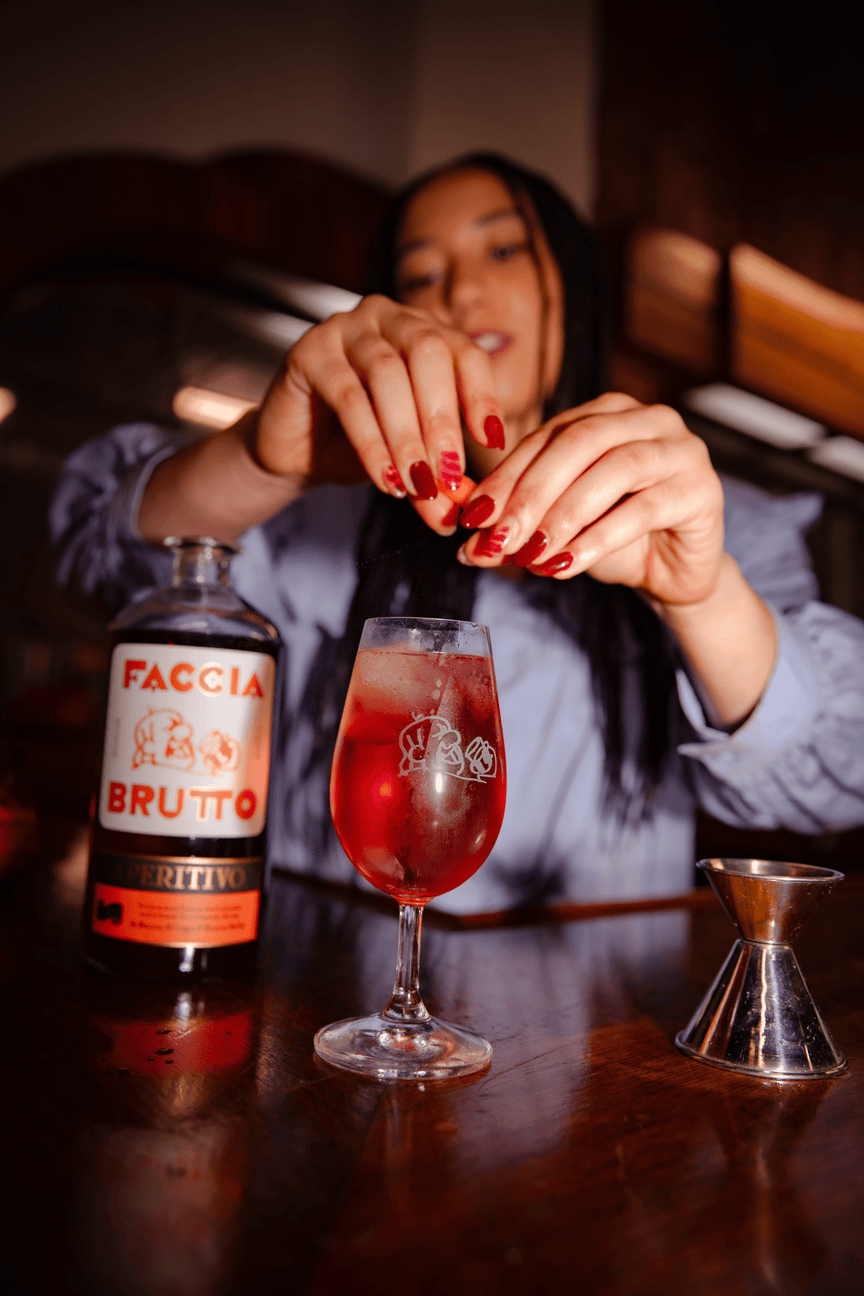
Nothing in the Faccia Brutto world feels like it was tested or sanitized. It feels lived-in. That energy is essential to why bartenders and consumers connect with it so deeply.
Building without shortcuts
Patrick’s approach to growth stands apart in today’s industry. There’s no burn rate. No pressure to scale at all costs. And no need to constantly chase new capital.
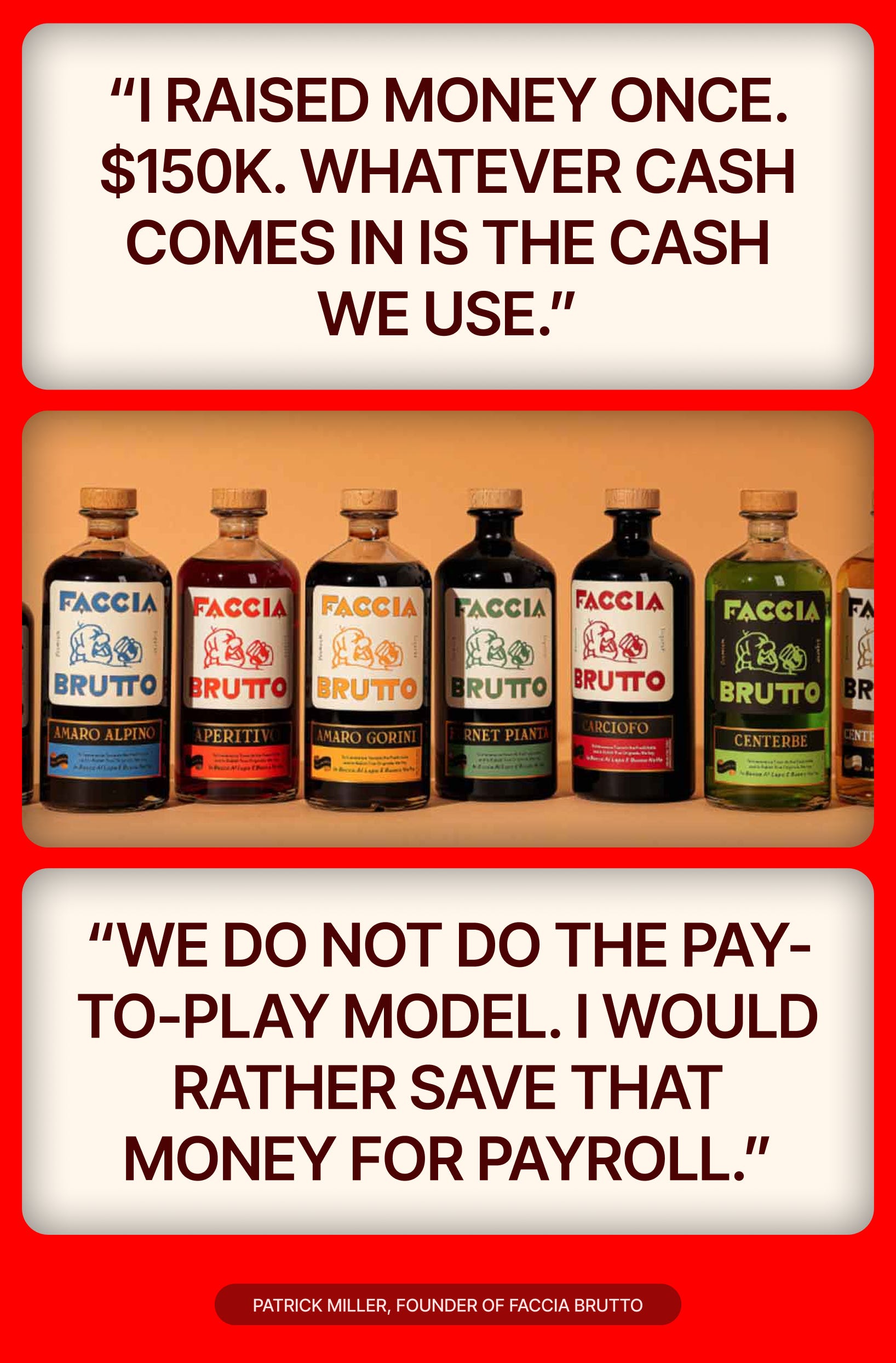
“I raised money once,” he says. “$150k. Whatever cash comes in is the cash we use.”
This grounds the brand’s most important rule: “We do not do the pay-to-play model. I would rather save that money for payroll.” This is unusual for the category and extremely intentional. If Faccia Brutto shows up on a menu, it’s because someone believes in the product. That authenticity creates a different kind of loyalty, and it sets the brand up for resilience rather than volatility.
Navigating a changing distributor landscape
The distributor landscape is becoming more consolidated and cost-driven. Many brands feel pressure to overspend in order to stay relevant. Faccia Brutto took the opposite path. It built demand first, often one bartender or one retailer at a time.
Launching in March 2020 shaped its trajectory. With bars closed, retail became the entry point. “The only place people could see our stuff was on shelves,” Patrick says. That retail momentum later informed how the brand moved into restaurants.
Today the brand sits at a 50/50 split between retail and on premise, which is rare and speaks to how well the identity performs in both environments.
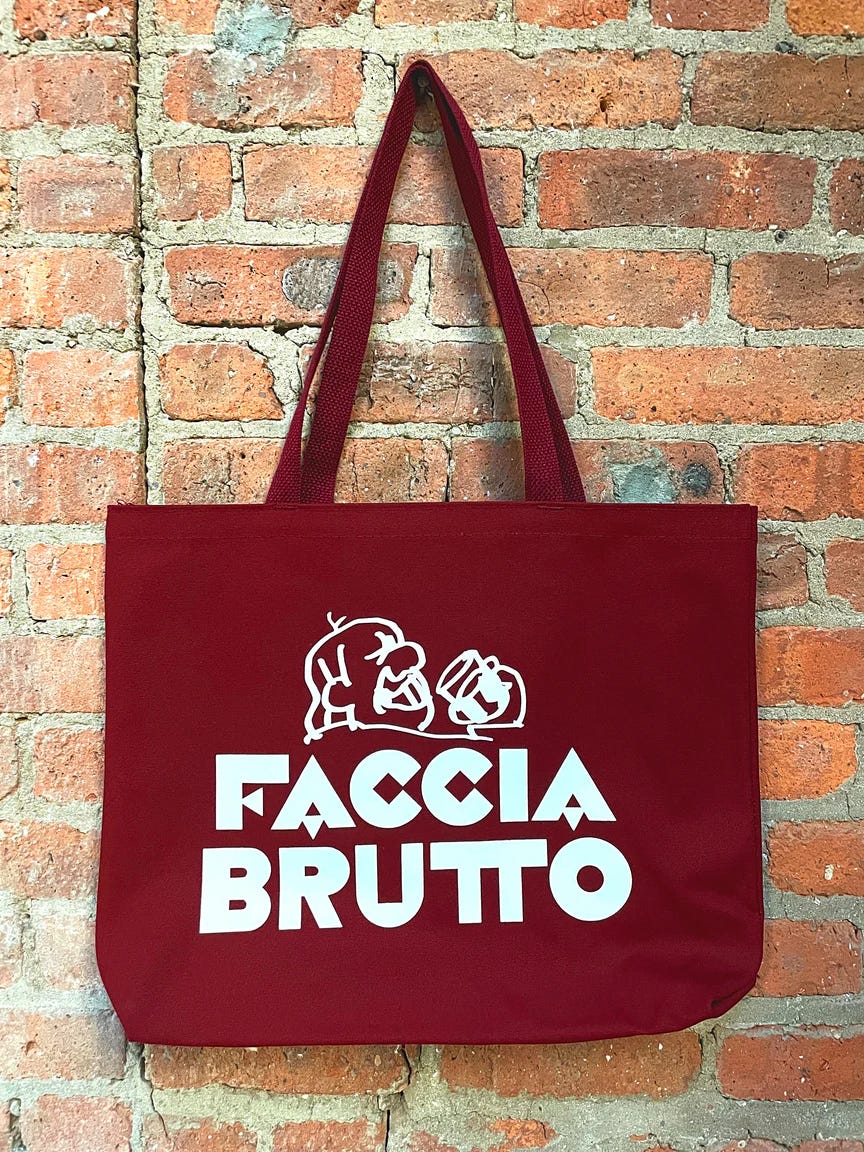
The bottle stands out on a backbar. The typography carries from across a room. The Bukowski figure is recognizable without being literal. The world-building does real work in a way that very few brands truly achieve. Bartenders see it, pick it up, and want to talk about it.
A brand that grows thoughtfully
Faccia Brutto runs with a small, focused team. Patrick and one teammate make the liquid. Another manages accounts. Another leads communications and collaborations. Their community approach is thoughtful rather than performative. Every January they host a dog adoption event at the distillery. It is small, warm, and very on-brand. As Patrick says: “It is more of a community than just a product.”
This is a company that knows what it is trying to build, why it matters, and what it refuses to compromise on. That kind of clarity shows up everywhere.
NEW RULES FROM FACCIA BRUTTO
Build from real demand
“I raised money once. Whatever cash comes in is the cash we use.”
Let imperfection speak
The wrong grammar, the disheveled figure, the lived-in world. It all signals honesty.
Honor tradition without copying it
Italian roots, American palate, modern execution.
The New Rules is a labor of love by nihilo.agency
Support us by:
- Subscribing
- Sharing
- Hiring us
- Inviting us to speak at your conference or event on branding/bev/alc/fun