


If you’re new here, welcome! If you found this feature, a Happy Hour roundup, or a Newbies breakdown helpful, join as a free subscriber. You’ll get more sharp, honest takes on where branding and beverage culture are actually headed.
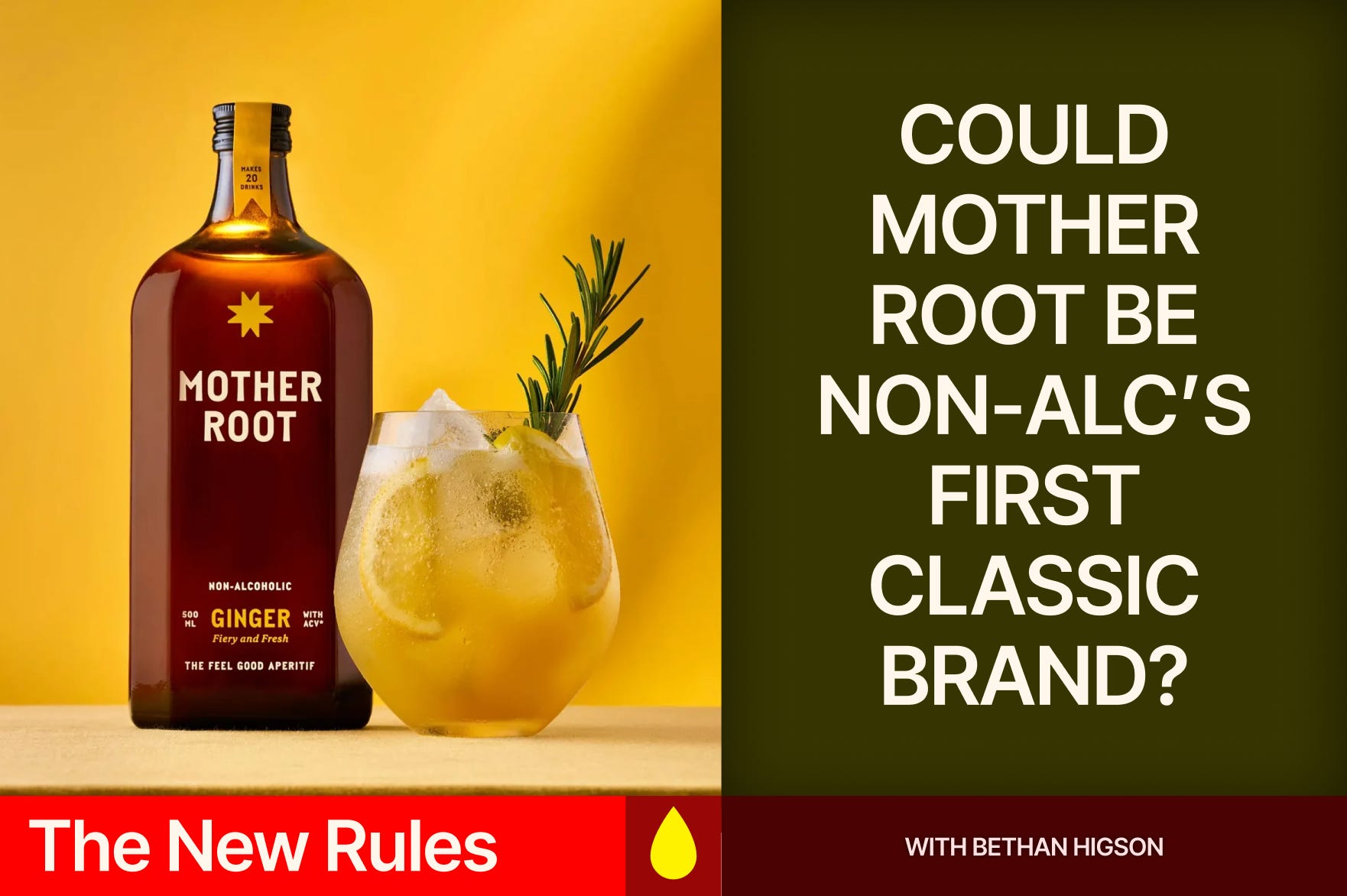
Mother Root is on a roll. In the last six months they’ve received a pre-money valuation of $10.74m, won funding via Dragons’ Den (that’s Shark Tank in the US), seen a huge spike in sales (a 2,000% uplift!) as a result of that TV appearance, been stocked in hundreds of stores in the UK and launched in the US.
How have they done all this? We asked founder Bethan Higson, and she told us:
1)Creating an alternative that isn’t ‘less’:
“I’d worked for ten years in the drinks industry. I loved great drinks. I loved great wines. I loved great spirits and cocktails and strong drinks that had bite and complexity. And non-alc replicas felt like such a disappointment, a letdown, a compromise.”
2)Going product (not brand) first:
“It was a liquid-led occasion problem I was looking to solve. This was the thing that I would crave and want and enjoy and look forward to, so it was really bottom-up creation as opposed to ‘look, this is a category now, let’s build brand and shoehorn the product underneath it’.”
3)Really understanding their customer:
“We know our brand is led by predominantly females, 40+. They love a good drink but they’re busier than ever, and want to be able to still lean into life and do things that make them feel good.”
4)Using their channels to build that relationship:
“I couldn’t be a founder pushing something that had no connection with the customer. They are very much at the heart of what we do, and we’ve grown in terms of our brand and understanding that relationship with them.”
5)And only moving into retail when the time was right
“At the end of December we’ll be seven years old, but it’s only in the last 18 months that people have been more widely aware of what we’re doing.”
Welcome to the new rules of alc-free
There’s one huge piece of information Bethan reminded us of (and it’s easy to forget amid all the alcohol-free brand hype):
We’re still in the very early stages of the non-alc sector.
It’s a category that’s 1)still growing in people’s awareness and 2)doesn’t, yet, have what you’d call any ‘classic’ brands. Ask yourself, who’s the Hendrick’s or the Guinness or the Dom Perignon of the alc-free world? Exactly.
That’s a huge space, and Mother Root could be on track to claim that status. So who better to ask about what the new rules are for non-alc? Here’s five to bear in mind:
The language is shifting – and we don’t just mean the label
This month, the EU announced a new ruling that says non-alcoholic beverages can no longer be labelled ‘gin’. And that feels like a harbinger for the future of alcohol-free messaging, as well as a positive change.
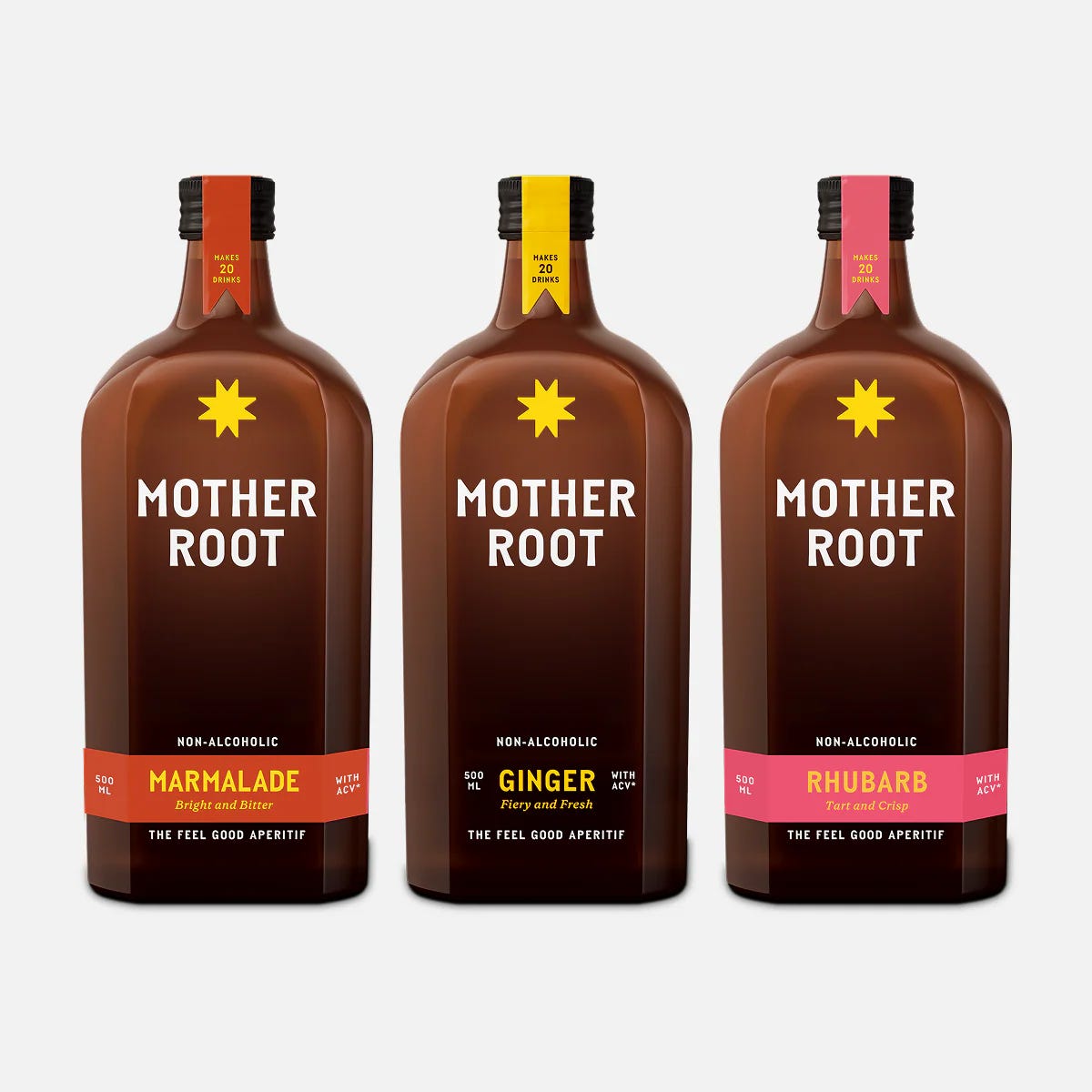
Why set a drinker up for disappointment when you taste nothing like the well-known thing you claim to replace? Mother Root has put a lot of effort into making their brand language alluring without falling into the comparison trap, and it works.
How you speak about your brand goes well beyond the product too. Alcohol-free drinks often verbally position themselves around being sober, but Mother Root actually see peaks during the biggest hosting and celebration months. “I think a lot of the language of non-alcohol is shifting from dry spells to embracing a lifestyle that feels like you,” says Bethan.
Non-alc needs to be louder and bolder with flavour
One of the key reasons Mother Root has succeeded is because of its distinctive taste (it’s a traditional oxymel recipe, which is based largely on vinegar and honey that ferments to create flavor).
It’s not a de-alcoholised or weak version of something else, and it’s not relying on the same ingredients that you’d expect elsewhere in alcohol. It’s very much its own thing, and the brand has been built around that. In fact, Bethan describes that taste as potentially even “divisive” – and that’s a good thing. It’s memorable. It’s interesting. It’s not a zero beer.
“When you’re not drinking, it’s not that you’re missing alcohol necessarily. It’s more that you want something exciting, bold, crafted.”
Be distinctive, but don’t get too weird
Mother Root has doubled down on strong flavors, and consumers are undoubtedly seeking out more interesting liquids and blends. They want options that are punchy and have a hook, but that doesn’t mean people are open to things that are unfamiliar or weird.

“I’ve done lots of flavors and experimenting, and it needs to be rooted in the familiar,” says Bethan. “It can be different and distinctive, but weird stuff is never going to fly, especially when you’re consuming it. So there’s rooting it in the innovative but not being completely wacky.”
People love simple things. You don’t need to be so complicated.
People care about what’s in the things they consume (as we can see from the ongoing tequila additive wars). Mother Root is five, simple, recognisable ingredients, and that’s a huge selling point. The business is also built around a single product, with the occasional limited edition flavours. As Bethan says:
“We’re very simple: in terms of the ingredients we use, and in terms of how we like to be. We’re straightforward. Our customers don’t want to do anything that’s overly complex or fussy, they just want to get to the moment of having a nice drink. I think you can overthink and over-engineer things.”
Understand which ritual you’re tapping into, and commit
As Bethan says, people’s habits are entrenched. It’s hard enough to break into one long-established ritual or category, let alone multiple of those. For example, sodas with nootropics or magnesium or CBD are – arguably – straddling multiple things. Is it a supplement? Is it medicine? Is it an enjoyable drink? Are you drinking for a moment of calm, or celebration? What part of the day does this belong in?
“I’ve been speaking to some young founders who are bringing out products which are cross-category – speaking to soft drinks and non-alcoholic, and I think that’s complicated,”says Bethan. “The general public don’t want to change their habits. So which ritual are you swapping out or leaning into? It’s really rare to be a brand that fits into multiple occasions. Choose one and really go after it.”